June 29, 2026
Reconciliation Meets Commercial Real Estate
By BOMA Edmonton and North
First-in-Canada Indigenous Participation Pilot Opens Doors in Alberta’s Second-Largest Industry
Commercial real estate (CRE) shapes Alberta’s skylines and is a major contributor to the province’s economy. Yet when it comes to reconciliation, the industry has been behind other sectors for years. At the same time, expectations are changing. Indigenous ownership is increasing, ESG pressures are rising, and companies are being asked to demonstrate meaningful engagement. CRE can no longer afford to sit on the sidelines.
The Creating Career Pathways in Commercial Real Estate (CCPCRE) initiative was developed in response to this gap. Funded through the Alberta Real Estate Foundation’s Legacy Grants program, it set out to test what it would actually take to bring Indigenous participation into the industry in a real, sustained way.
At its core, CCPCRE is not just a workforce initiative. It is a coordinated model built around three connected areas: Indigenous employment pathways, industry education, and Indigenous-led research. Each piece plays a different role, and together they move the industry from awareness into action.
The research identifies the systemic barriers and explains why Indigenous participation has remained low. Workforce development translates that insight into real entry points and supports people once they are in the industry. Industry education prepares employers to understand their role and take part in that change. This is not three separate activities. It is a cycle. Research informs action, work placements test and refine the model, and education builds the conditions for it to grow.
From Awareness to Action
Co-founded by BOMA Edmonton and North, Oteenow Employment and Training Society (Oteenow), and Tribal Chiefs Employment and Training Services Association (TCETSA), the initiative addressed a clear disconnect. Commercial real estate was not on the radar for many Indigenous job seekers, and Indigenous talent was not on the radar for much of the industry. The opportunity existed, but the pathway did not.
CCPCRE focused on building that pathway and testing it in real time.
Since 2022, the project has:
· Placed Indigenous participants in paid internships with leading CRE firms, with a 75% employment conversion rate
· Supported those placements with mentorship, workplace training, and ongoing retention supports
· Reached more than 10,000 Indigenous job seekers through outreach and career awareness
· Engaged more than 1,400 industry professionals directly through education and training
These results matter, but more importantly, they show what is possible. When clear pathways exist and employers are prepared, Indigenous talent enters the industry and succeeds in it.
The program evolved over time. What began as a more traditional training and awareness model shifted quickly to an “employment-first” approach. In commercial real estate, entry into the industry is the barrier. Once people are in, they learn, grow, and build careers. The project adapted to that reality and focused on getting people into roles, then supporting them to stay and advance.
“Before this, I didn’t even know commercial real estate was an option,” shared an intern. “Now I can see a long-term career path.”
“Being part of this initiative pushed us to look beyond traditional hiring practices and consider our role in reconciliation in a more practical way,” said a participating employer.
What the Research Tells Us
The research conducted through CCPCRE reinforces why this work matters.
It shows that low Indigenous participation in CRE is not about lack of interest. It is about:
· limited awareness of career opportunities
· lack of clear entry points
· structural barriers tied to land, access, and industry networks
At the same time, the findings point to a clear opportunity. When pathways are visible and accessible, interest is there.
The research also makes an important distinction. Indigenous participation in CRE cannot be treated as an extension of equity, diversity, and inclusion. The realities are different, tied to land, history, and ongoing legal and economic relationships. For a land-based industry, this is not a side issue. It is central.
A Model for Moving Forward
CCPCRE demonstrates a practical way forward for the industry.
It shows that progress does not come from awareness alone. It comes from:
· creating real entry points into the industry
· supporting people once they are there
· building long-term partnerships with Indigenous organizations
· and preparing companies to take part in that work in a meaningful way
Participating companies did more than host interns. They invested time, resources, and training. They began to ask more difficult questions about reconciliation, land, and their role in a changing industry. For many, this was a shift from seeing Indigenous engagement as an EDI exercise to understanding it as a core part of how the business operates.
A Lasting Impact
CCPCRE did not transform the entire sector overnight. That was never the goal.
What it did was create something that did not exist before: a tested, practical pathway into commercial real estate for Indigenous people, supported by research, relationships, and real employer participation.
It moved reconciliation in CRE from conversation to action.
It also showed the industry where it needs to go. As Indigenous ownership grows, as expectations around engagement increase, and as workforce pressures continue, companies that understand this now will be better positioned for what comes next.
The pilot has ended, but the model remains. Partners are continuing the work, additional placements are planned, and the approach can be replicated in other regions.
That is the legacy. Not just a successful project in which lives were changed and an industry woke up, but a way forward for a more inclusive, better-prepared commercial real estate industry.
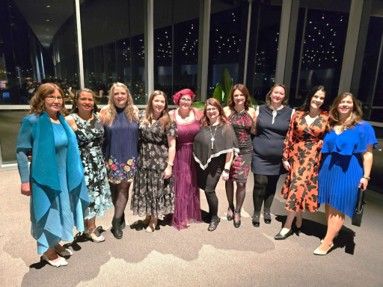
CCPCRE participant Charlene Emery (first on left) celebrates International Women’s Day with the Qualico Properties team. Charlene is on the building operations and maintenance team at Qualico. Qualico featured CCPCRE and Charlene in blog post and video for National Indigenous People’s Month.
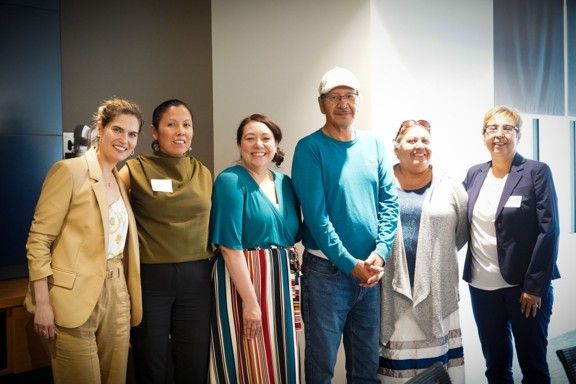
CCPCRE founders, contractor, Elder, and educator pictured at an Indigenous economic sovereignty workshop for CRE professionals by Dr. Shalene Jobin in 2023. Pictured here from left to right: Lisa Baroldi (BOMA Edmonton and North), Glinis Buffalo (Glinis Buffalo Consulting), Dr. Shalene Jobin, Elder Gilman Cardinal (Kehewin First Nation), Roberta Bearhead (Oteenow), Eva John Gladue (TCETSA)

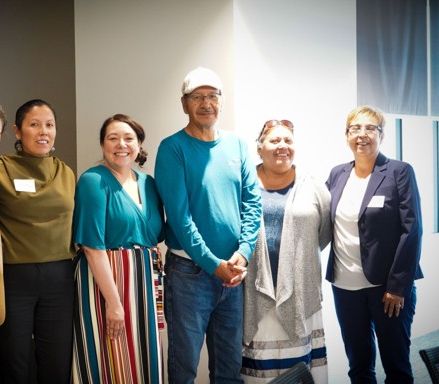
Tirovest, now Colliers, accepts the BOMA Edmonton and North Indigenous Inclusion award with CCPCRE participant Alexis Sodor, Property Management Administrator (third from left)
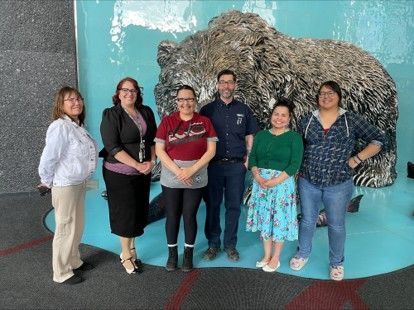
CCCPRE Interns participate in building tours and Oteenow’s Workforce Development Training in preparation for their six-month CRE internships in property management administration or building operations and maintenance.
Contributor

BOMA Edmonton and North
BOMA Edmonton and North is part of a global network of BOMAs that help members reach their performance goals. As the top commercial real estate association in the world, we know that high performing buildings, people, and portfolios are essential to your success, and we help make that happen.